
There’s something magical about the moment you break through crusty sourdough to reveal rich, tender beef stew nestled inside. This beef stew in a bread bowl transforms an ordinary weeknight into something special, combining the comfort of a classic stew with the rustic charm of edible serving bowls. What started as a simple desire to make dinner feel more exciting has become our family’s go-to recipe for cold evenings when we crave something both nourishing and memorable. The beauty lies not just in its impressive presentation, but in how this one-dish wonder eliminates the need for extra bowls while delivering maximum comfort with minimal cleanup.
Why Beef Stew in a Bread Bowl Matters
This beef stew in a bread bowl recipe solves the eternal weeknight dilemma of creating a meal that feels both effortless and extraordinary. While traditional stews simmer away, this version transforms your dinner table into something that feels restaurant-special without the fuss. The bread bowl isn’t just presentation—it’s practical magic that keeps your stew warm longer while giving everyone their own personal portion. For busy families, this means fewer dishes to wash and more time to enjoy each other’s company around the table.
Behind the Recipe
The inspiration for this recipe came during a particularly hectic winter week when I was juggling deadlines and dinner prep. I had planned to make my usual beef stew but realized I was out of our regular dinner rolls. Spotting some day-old sourdough boules at the market, I had that wonderful “aha!” moment that every home cook treasures. What if the bread could be both the vessel and part of the meal? That first attempt was a revelation—the bread absorbed just enough of the stew’s rich flavors while maintaining its structure, creating an entirely new eating experience that had my family asking for seconds before they’d finished their firsts.
External Resources
Creating the perfect beef stew in a bread bowl draws on traditional slow-cooking techniques that develop deep, complex flavors. For those interested in mastering the fundamentals of slow cooking, Let’s Take It Slow – Slow Cooking Basics and Fundamentals offers excellent guidance on building layers of flavor. When selecting your beef, understanding the nutritional benefits can help you make informed choices—Beef: Nutrition, Benefits, and Downsides provides comprehensive information. For more warming winter recipes, explore our collection of cozy fall soups and stews, or try our French onion pot roast for another comfort food favorite.
Ingredients
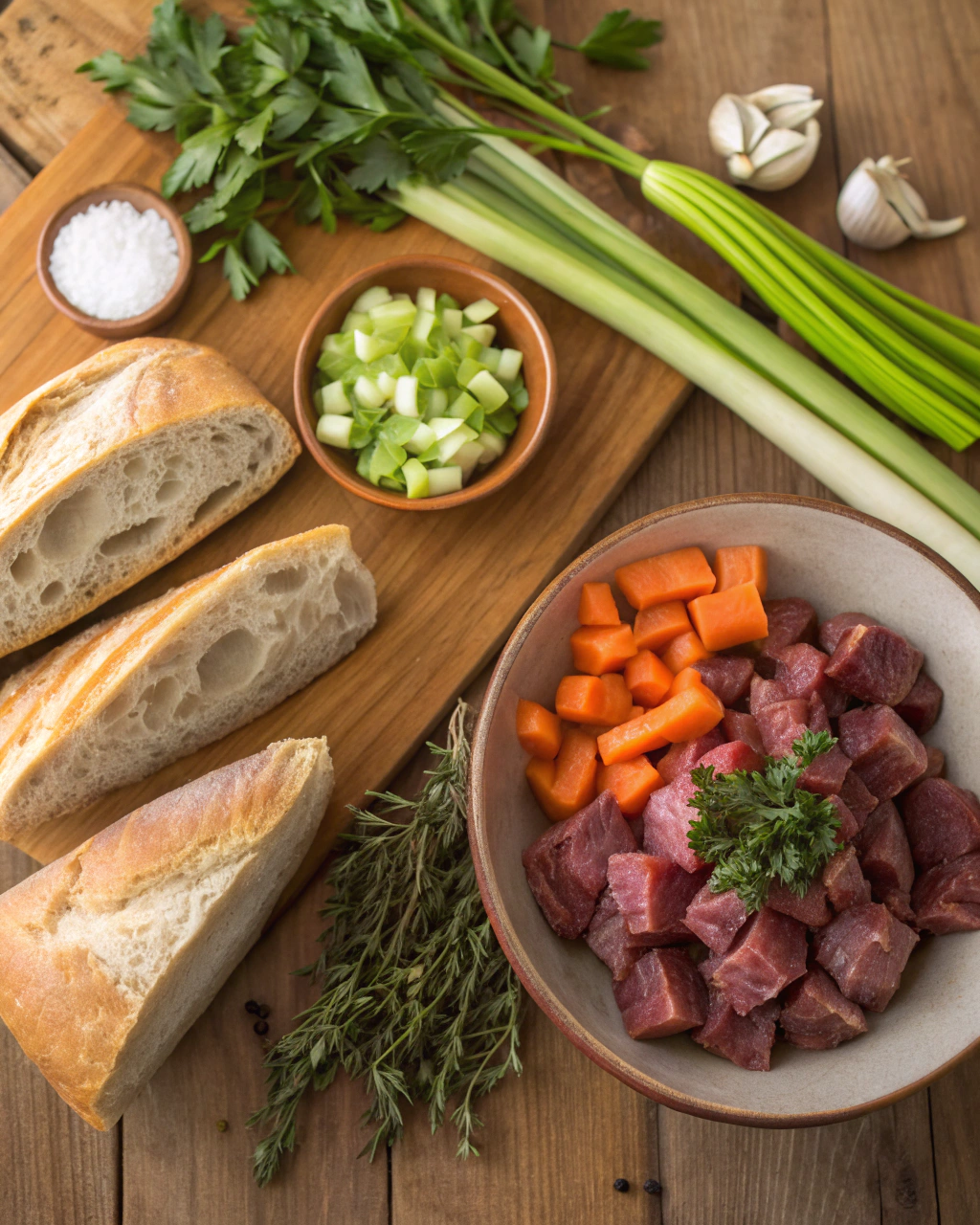
|
Ingredient Spotlight
The magic of this beef stew in a bread bowl lies in understanding how each component contributes to the final dish. Beef tallow creates an incredibly rich base, but don’t worry if you can’t find it—good olive oil works perfectly. The key to tender beef is choosing the right cut; beef round becomes melt-in-your-mouth tender with slow braising, while the natural gelatin creates that silky texture we crave. Fresh herbs make a noticeable difference here—thyme and rosemary infuse the stew with earthy, aromatic notes that dried herbs simply can’t match. The sourdough boules aren’t just vessels; their tangy flavor complements the rich stew beautifully while their sturdy crust holds up to the liquid without becoming soggy.
Timing
|
Instructions
|
Tips & Tricks for Perfect Beef Stew in a Bread Bowl
|
Recipe Variations & Substitutions
Busy Cook’s Shortcut: Use a slow cooker on low for 6-8 hours after searing the beef and vegetables on the stovetop. Kid-Friendly Version: Substitute the red wine with additional beef stock and add diced potatoes for extra heartiness. Gluten-Free Option: Replace flour with cornstarch mixed with cold water, and serve in gluten-free bread bowls or regular bowls. Vegetable Boost: Add mushrooms, parsnips, or turnips during the last hour of cooking for extra nutrition and flavor.
Leftover & Reuse Ideas
Leftover beef stew in a bread bowl transforms beautifully into new meals. Thin it with extra stock to create a hearty soup, or use it as a filling for savory hand pies. The tender beef makes an excellent base for shepherd’s pie—just top with mashed potatoes and bake. You can also serve it over rice, pasta, or baked potatoes for completely different meals. Store leftovers in the refrigerator for up to 4 days or freeze for up to 3 months.
Pairing Ideas
This rich, hearty stew pairs beautifully with crisp, refreshing sides that cut through the richness. A simple green salad with lemon vinaigrette provides the perfect contrast, while roasted Brussels sprouts or steamed green beans add color and nutrition. For beverages, consider sparkling apple cider, fresh lemonade, or herbal teas like chamomile or mint. The bread bowl itself eliminates the need for additional starches, making this a complete, satisfying meal.
Serving Suggestions
Present your beef stew in a bread bowl on individual plates or wooden boards for a rustic, restaurant-style presentation. Provide soup spoons and encourage guests to tear off pieces of the bread bowl to soak up the delicious broth. Set out small bowls of extra fresh herbs, grated cheese, or a dollop of sour cream for those who want to customize their portions. The visual impact of these individual bread bowls creates an instant conversation starter that makes any meal feel special.
Nutritional Information
Per serving: Approximately 485 calories, 28g protein, 45g carbohydrates, 18g fat, 4g fiber. This recipe provides excellent sources of iron, vitamin B12, and zinc from the beef, plus vitamin A from the carrots and various B vitamins from the enriched bread. The vegetables contribute fiber and antioxidants, making this a well-balanced, nutritious meal.
Common Mistakes to Avoid
Don’t rush the searing process—properly browned beef is crucial for deep flavor development. Avoid cutting the beef too small; larger chunks hold up better during the long braising time. Many home cooks skip the wine reduction step, but this concentrates flavors significantly. Don’t hollow out your bread bowls too early or they’ll become stale; prepare them just before serving. Finally, remember to remove the bay leaves before serving—nobody wants to bite into one of those! These little mistakes happen to everyone, but knowing about them helps you create the perfect dish every time.
Storage & Reheating Tips
Store leftover stew separately from any unused bread bowls to maintain the bread’s texture. The stew keeps beautifully in the refrigerator for up to 4 days or can be frozen for up to 3 months. When reheating, do so gently over medium-low heat, stirring occasionally and adding a splash of stock if needed. For make-ahead preparation, you can cook the stew completely up to 2 days in advance—the flavors actually improve with time. Fresh bread bowls should always be prepared on serving day for the best texture and presentation.
- Can I make beef stew in a bread bowl ahead of time?
- Yes! The stew component can be made 1-2 days ahead and actually improves in flavor. However, prepare fresh bread bowls on serving day for the best texture and presentation.
- What’s the best bread for beef stew in a bread bowl?
- Sourdough boules work perfectly due to their sturdy crust and tangy flavor that complements the rich stew. Any round, crusty bread with a firm structure will work well.
- Is beef stew in a bread bowl kid-friendly?
- Absolutely! Kids love the novelty of eating from a bread bowl. For picky eaters, you can substitute the wine with extra beef stock and add familiar vegetables like potatoes.
- Can I use a slow cooker for this beef stew in a bread bowl recipe?
- Yes! After searing the beef and vegetables on the stovetop, transfer everything to a slow cooker and cook on low for 6-8 hours until the beef is tender.
- How do I prevent the bread bowl from getting soggy?
- Choose bread with a thick, crusty exterior and don’t fill the bowls until just before serving. The bread should be warmed but not hot when you add the stew.
FAQs
Conclusion
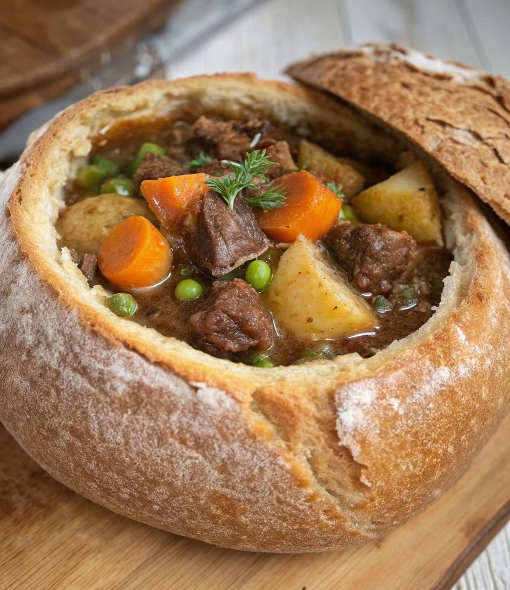
This beef stew in a bread bowl recipe proves that comfort food can be both practical and impressive. The combination of tender, flavorful beef stew nestled in crusty sourdough creates a meal that satisfies both the stomach and the soul. With its make-ahead friendly nature and built-in presentation factor, this recipe solves the weeknight dinner dilemma while creating lasting memories around your dinner table. The beauty lies not just in its rustic elegance, but in how it brings people together over a shared experience of breaking bread—literally.
Made these beef stew in a bread bowl? Drop your twist in the comments, rate the recipe, and tag us on facebook, instagram with #erinrecipes — we might feature your creation!
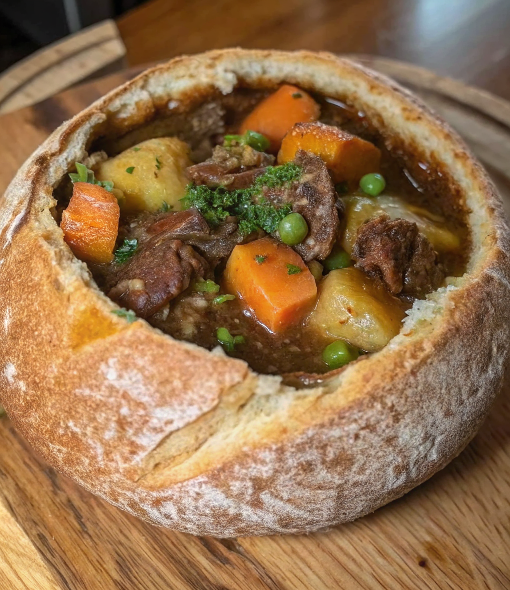
Beef Stew in a Bread Bowl – Hearty Comfort in Every Bite
Ingredients
Instructions
- Preheat Oven: Preheat oven to 300°F (150°C).
- Sear Beef: Heat beef tallow in a large casserole over medium heat. Season beef with salt and pepper, then sear until browned. Set aside.
- Cook Vegetables: Add onions, carrots, and celery to casserole. Cook until softened.
- Thicken Sauce: Stir in flour and tomato paste. Add wine and boil until reduced by half.
- Combine Ingredients: Return beef to casserole. Add beef stock to cover ingredients.
- Slow Cook: Cover, reduce heat to simmer, and cook in oven for 2½ hours until beef is tender.
- Prepare Bread Bowls: Hollow out sourdough boules and warm them.
- Assemble and Serve: Fill bread bowls with stew. Garnish with pearl onions and parsley.