
Did you know that 93% of diners eat with their eyes first, making visual presentation the single most crucial factor in food satisfaction? When I developed this Layered Sweet Potato, Butternut Squash, Carrot Lasagna with Feta, Walnuts, and Cranberry-Honey Glaze, I was inspired by the golden hour light streaming through autumn leaves—those rich amber, burnt orange, and deep coral hues that make fall so visually stunning. This vegetarian masterpiece transforms humble root vegetables into an architectural wonder that rivals any traditional pasta lasagna, creating layers of color so vibrant they seem to glow from within. You’ll learn professional plating techniques, color-balancing secrets, and styling tricks that will make your dinner table look like a magazine spread, turning every slice into an Instagram-worthy moment.
Why Visual Appeal Matters in Layered Sweet Potato, Butternut Squash, Carrot Lasagna
The psychology of food presentation reveals that beautiful dishes actually taste better to our brains. When we create stunning visual contrast through the natural ombré effect of orange vegetables, creamy white feta, and jewel-toned cranberry glaze, we’re triggering anticipation and enhancing the entire dining experience. This Layered Sweet Potato, Butternut Squash, Carrot Lasagna with Feta, Walnuts, and Cranberry-Honey Glaze exemplifies how thoughtful layering and color placement can transform a simple vegetable dish into fine dining artistry.
External Resources
For those passionate about root vegetable cookery, explore our ultra-creamy spinach and mushroom lasagna recipe for additional layering inspiration, and don’t miss our comprehensive guide to cozy fall soups and stews recipes that showcase seasonal produce beautifully. Professional chefs often reference Love and Lemons’ roasted root vegetables techniques for achieving perfect texture, while the biodynamic vegetable garden layering technique offers fascinating insights into natural color arrangements.
Ingredients
|
Ingredient Spotlight
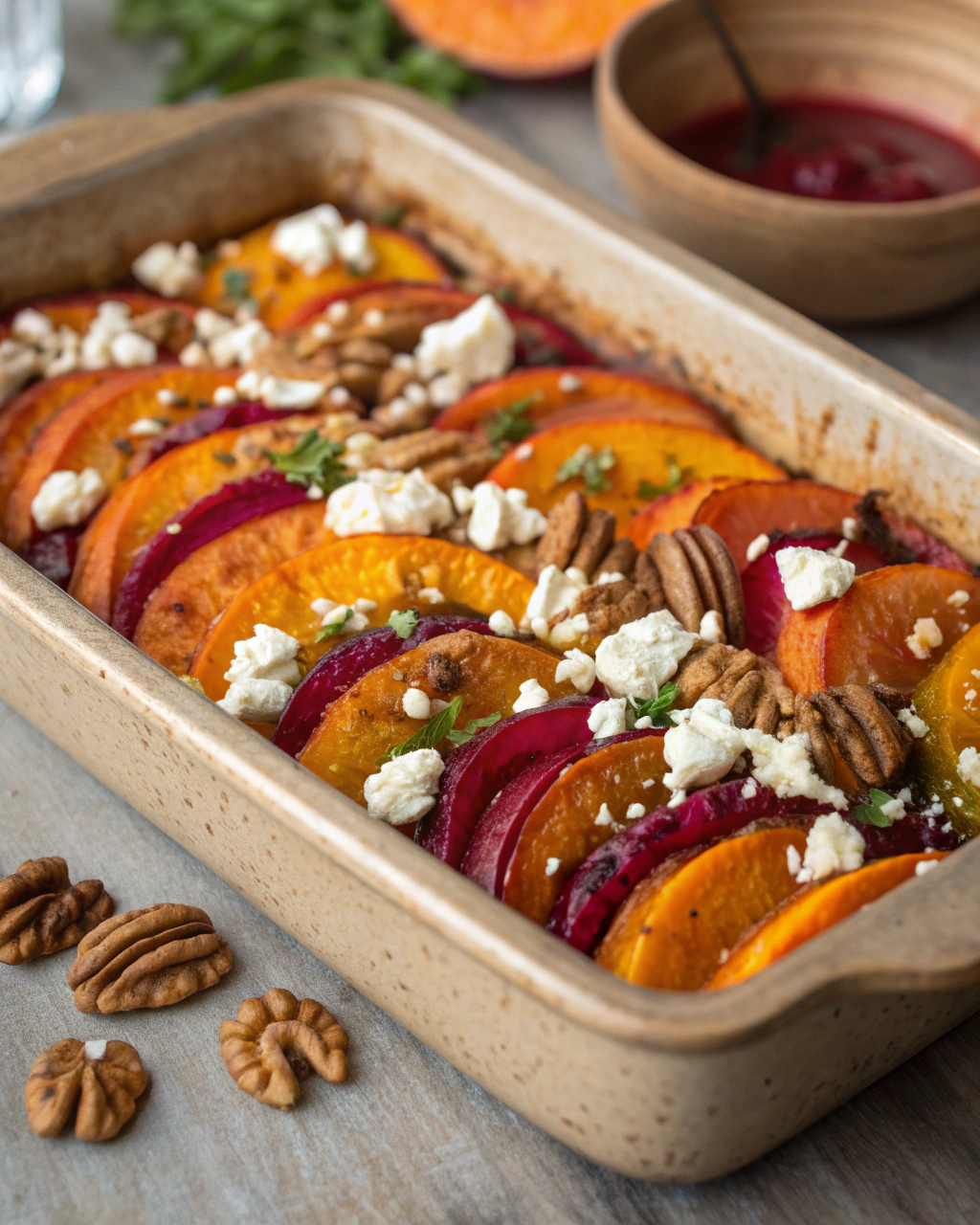
Each component serves a specific visual purpose: the sweet potatoes provide our golden base with their naturally caramelized edges, while butternut squash offers those coveted burnt orange tones. Carrots contribute bright coral ribbons that catch light beautifully. The stark white feta creates essential contrast points, preventing color monotony, while toasted walnuts add crucial textural interest and earthy brown accents. The cranberry-honey glaze transforms from deep ruby to glossy amber, creating a professional lacquered finish that photographers dream of capturing.
Timing
|
Instructions for Perfect Layered Sweet Potato, Butternut Squash, Carrot Lasagna
|
Behind the Recipe
The visual inspiration for this Layered Sweet Potato, Butternut Squash, Carrot Lasagna with Feta, Walnuts, and Cranberry-Honey Glaze came from studying autumn landscape paintings, particularly the way artists layer warm tones to create depth and movement. I wanted to recreate that same ombré effect using natural vegetable pigments, with the cranberry glaze serving as our \”varnish\”—that final glossy layer that makes colors pop and creates professional-level sheen. The geometric arrangement mimics sedimentary rock formations, each layer telling its own story while contributing to the overall masterpiece.
Tips & Tricks for Perfect Layered Sweet Potato, Butternut Squash, Carrot Lasagna
|
Recipe Variations & Substitutions
High Contrast Plating Option: Substitute goat cheese for feta to create stark white layers, or add purple cabbage ribbons for dramatic color contrast. Textural Twist: Replace walnuts with toasted pumpkin seeds for different visual texture and crunch. Vegan Version: Use cashew cream instead of feta, maintaining the white contrast while accommodating dietary needs. Glaze Alternatives: Try pomegranate molasses mixed with maple syrup for deeper burgundy tones, or orange juice reduction for monochromatic amber elegance.
Pairing Ideas
Serve on warm white plates to make colors pop, alongside our carrot ribbon salad for complementary orange tones. Pair with sparkling apple cider in clear glass stemware, or try herbal teas like chamomile or ginger that won’t compete with the visual presentation. Consider rustic wooden serving boards for a farmhouse aesthetic, or sleek black plates for modern drama. Garnish plates with fresh thyme sprigs or pomegranate arils for additional color punctuation.
Nutritional Information
Per serving: Approximately 285 calories, 12g fat, 38g carbohydrates, 6g fiber, 8g protein. Rich in beta-carotene, vitamin A, potassium, and healthy fats from walnuts. The natural sugars from vegetables and honey provide sustained energy, while feta contributes calcium and protein for balanced nutrition.
Leftover & Reuse Ideas
Transform leftovers into elegant individual ramekin presentations, or dice and fold into grain bowls for colorful lunch options. Cold slices make stunning additions to cheese boards, while crumbled portions work beautifully in autumn salads. The flavors actually intensify overnight, making day-two presentations even more photogenic with deeper, more saturated colors.
Serving Suggestions for Stunning Presentation
For restaurant-quality plating, use a large, sharp knife to cut clean squares, wiping blade between cuts. Place each portion slightly off-center on warmed plates, drizzle additional cranberry glaze around the plate’s rim in artistic dots, and garnish with a small cluster of toasted walnuts and fresh herb sprigs. Consider using white rectangular plates for modern presentation, or rustic ceramic rounds for farmhouse charm. The key is choosing serving pieces that complement rather than compete with the lasagna’s natural beauty. For special occasions, warm plates in a 200°F oven for 2-3 minutes—this keeps the dish at optimal serving temperature while enhancing the glaze’s glossy appearance. Add microgreens or edible flowers like nasturtiums for professional finishing touches that food photographers love.
Storage & Reheating Tips
Store covered in refrigerator for up to 4 days. For optimal reheating, cover with foil and warm in 325°F oven for 15-20 minutes to maintain layer integrity. Avoid microwaving, which can make vegetables mushy and destroy the careful layering. The glaze may need refreshing—simply warm a small amount of cranberry juice with honey and drizzle over reheated portions to restore that professional sheen.
Common Mistakes to Avoid
Never slice vegetables too thick—this creates unstable layers that collapse when serving. Avoid over-roasting vegetables initially, as they’ll continue cooking during the lasagna baking process. Don’t distribute cheese evenly; instead, create intentional clusters for better visual impact. The biggest mistake is rushing the resting period—those 10 minutes are crucial for clean, photograph-worthy slices. Finally, resist the urge to over-glaze; thin, multiple applications create better visual depth than one heavy coating that can make the dish look overly sweet or artificial.
- Can I make Layered Sweet Potato, Butternut Squash, Carrot Lasagna ahead of time?
- Yes! Assemble completely up to 24 hours ahead, cover tightly, and refrigerate. Add 10-15 minutes to baking time if cooking from cold. The flavors actually improve overnight.
- Is this Layered Sweet Potato, Butternut Squash, Carrot Lasagna gluten-free?
- Absolutely! This recipe is naturally gluten-free, making it perfect for guests with dietary restrictions while maintaining stunning visual appeal.
- How do I prevent my Layered Sweet Potato, Butternut Squash, Carrot Lasagna from falling apart?
- Proper resting time is crucial—let it sit for 10 full minutes after baking. Also, ensure vegetables are sliced uniformly and not over-roasted initially.
- Can I freeze Layered Sweet Potato, Butternut Squash, Carrot Lasagna?
- While possible, freezing affects texture and visual appeal. For best presentation results, prepare fresh or store refrigerated for up to 4 days.
- What’s the secret to achieving those perfect golden layers in Layered Sweet Potato, Butternut Squash, Carrot Lasagna?
- Use a mandoline for uniform slicing, don’t overcrowd during initial roasting, and ensure your final bake achieves proper caramelization without burning.
Frequently Asked Questions
Conclusion
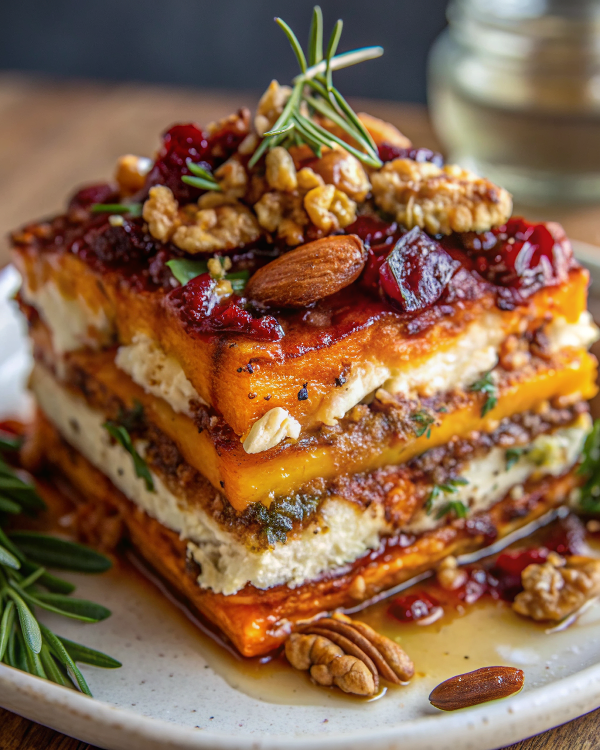
This Layered Sweet Potato, Butternut Squash, Carrot Lasagna with Feta, Walnuts, and Cranberry-Honey Glaze proves that vegetarian cuisine can be every bit as visually stunning and satisfying as any traditional dish. The careful attention to color placement, texture contrast, and professional finishing techniques transforms simple root vegetables into an architectural masterpiece worthy of any special occasion. Remember, cooking is an art form, and presentation is your signature—make it count.
Made these Layered Sweet Potato, Butternut Squash, Carrot Lasagna? Drop your twist in the comments, rate the recipe, and tag us on facebook, instagram with #erinrecipes — we might feature your creation!
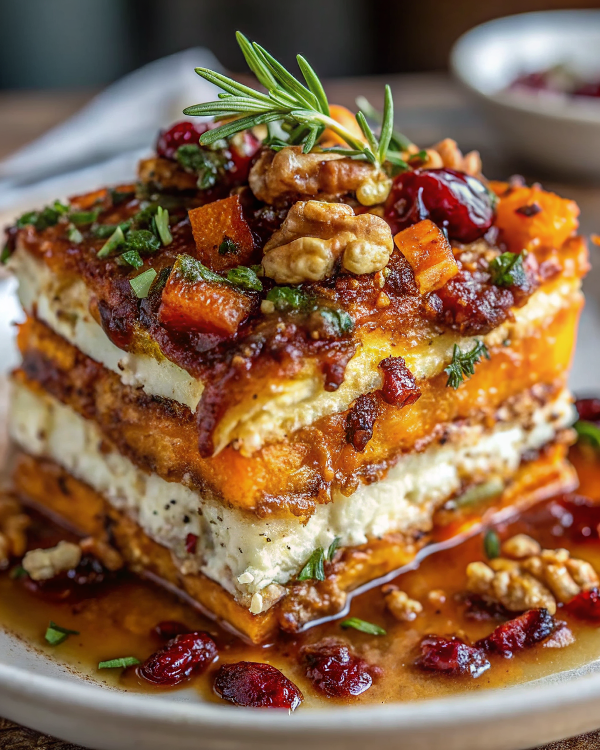
Layered Sweet Potato Butternut Squash Carrot Lasagna Recipe
Ingredients
Instructions
- Preheat and prepare: Preheat oven to 375°F (190°C). Grease a baking dish.
- Roast vegetables: Toss sliced sweet potatoes, squash, and carrots with 1 tbsp olive oil, salt, and pepper. Roast for 15–20 minutes until just tender.
- First layer: Layer sweet potatoes on the bottom of the dish. Add some feta and walnuts.
- Continue layering: Add a layer of squash, then carrots. Continue layering vegetables, feta, and walnuts until full. Finish with sweet potatoes on top.
- Make glaze: In a saucepan, simmer cranberry juice, honey, and balsamic vinegar for 5–7 minutes until reduced to a glaze.
- Assemble and bake: Drizzle ⅔ of the glaze over the lasagna. Cover with foil and bake for 30 minutes.
- Final bake: Remove foil, drizzle remaining glaze, and bake uncovered for 10–15 more minutes until golden and bubbling.
- Rest and serve: Let rest for 10 minutes before slicing and serving.