
Introduction
Did you know that Greece has one of the highest rates of vegetable consumption in the world, with traditional Greek salad being a cornerstone of their Mediterranean diet for over 2,000 years? This vibrant, sun-soaked dish isn’t just a salad – it’s a celebration of Greece’s agricultural heritage served on a plate. Traditional Greek salad (Horiatiki) transforms simple, fresh ingredients into something extraordinary through the magic of simplicity and quality.
In this comprehensive guide, you’ll discover the authentic secrets behind creating a perfect Horiatiki that rivals those served in tavernas overlooking the Aegean Sea. From selecting the ripest tomatoes to achieving that perfect olive oil drizzle, I’ll walk you through every step of crafting this Mediterranean masterpiece that’s both incredibly healthy and utterly delicious.
Why Traditional Greek Salad (Horiatiki) Matters
Understanding the cultural significance of Traditional Greek salad (Horiatiki) elevates this dish from a simple side to a meaningful culinary experience. Unlike American Greek salads, authentic Horiatiki never includes lettuce – it’s purely about showcasing the natural flavors of sun-ripened vegetables, briny olives, and creamy feta cheese. This dish represents the essence of Greek hospitality and the Mediterranean philosophy of celebrating fresh, seasonal ingredients in their most natural state.
External Resources
To complement your Traditional Greek salad (Horiatiki), explore our creamy fruit salad for a refreshing dessert option, or try our flavorful balsamic vinaigrette for additional dressing inspiration. For more Mediterranean flavors, check out these Mediterranean roasted vegetables and discover 51 best salad recipes to expand your repertoire.
Ingredients
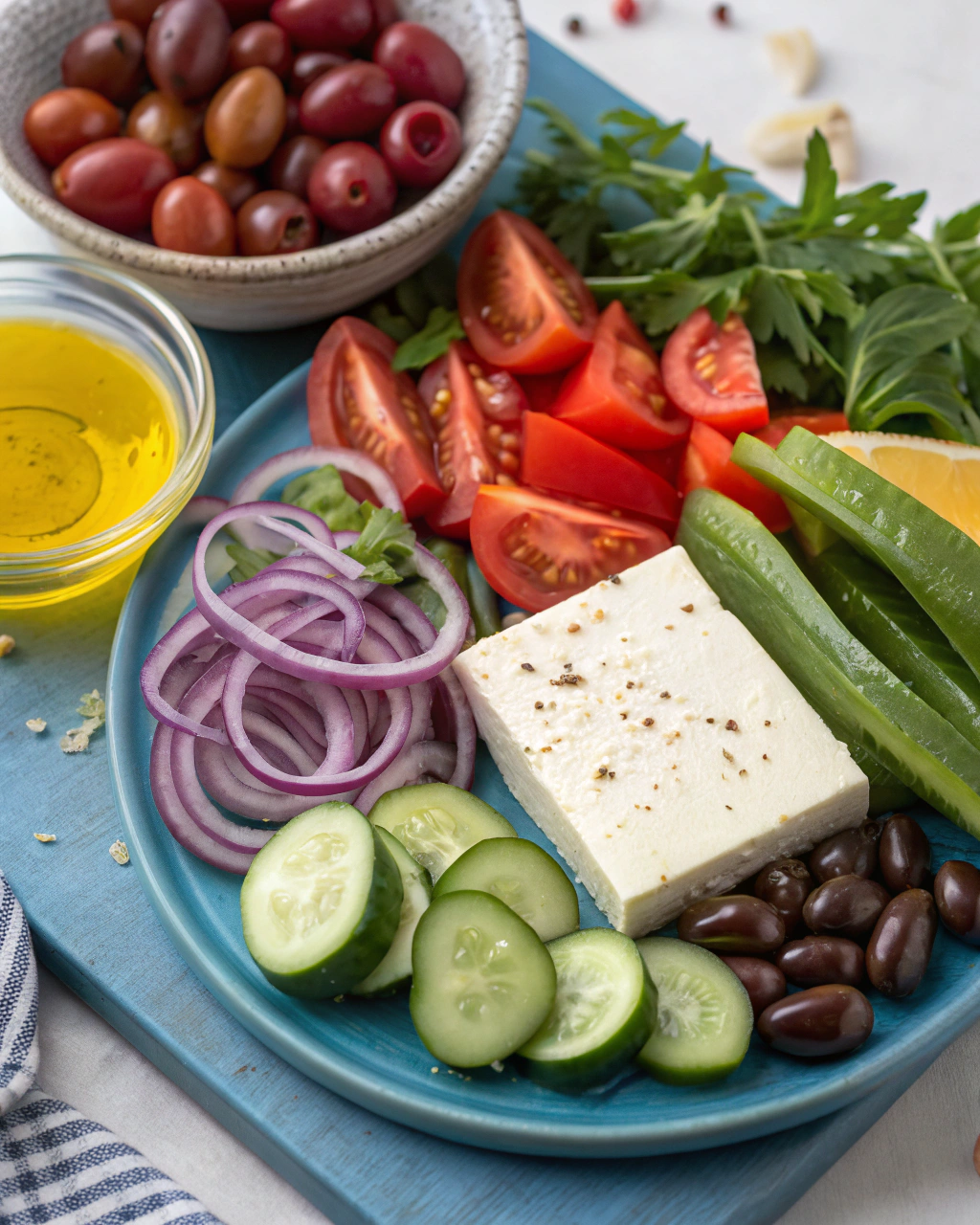
Traditional Greek Salad (Horiatiki) Ingredients
|
Ingredient Spotlight
The magic of Traditional Greek salad (Horiatiki) lies in understanding each ingredient’s role. Kalamata olives provide that distinctive briny punch that defines Greek cuisine, while feta cheese in brine delivers creamy saltiness that ties all flavors together. The red onion adds sharp bite that mellows when soaked, and extra virgin olive oil acts as both dressing and flavor enhancer. Dried oregano is the signature herb that transforms simple vegetables into an unmistakably Greek experience, while red wine vinegar provides the acidic brightness that balances the rich olive oil and cheese.
Timing
|
Instructions
|
Tips & Tricks for Perfect Traditional Greek Salad (Horiatiki)
|
Recipe Variations & Substitutions
Cretan-Style Horiatiki: Add rusks (paximadia) or toasted pita pieces for crunch and substitute mizithra cheese for half the feta. Include capers for extra Mediterranean flair.
Winter Horiatiki: When fresh tomatoes aren’t in season, use cherry tomatoes or substitute with roasted red peppers and add extra cucumber for freshness.
Protein-Packed Version: Add chickpeas or white beans for plant-based protein, or include grilled chicken strips for a complete meal.
Herb-Enhanced Horiatiki: Incorporate fresh herbs like parsley, mint, or dill along with oregano for a more complex flavor profile that’s popular in modern Greek cooking.
Behind the Recipe
This Traditional Greek salad (Horiatiki) recipe comes from generations of Greek cooks who understood that the best dishes celebrate ingredients rather than mask them. Horiatiki literally means “village salad,” reflecting its humble origins as a farmer’s meal made from whatever vegetables were ripest in the garden. The absence of lettuce isn’t an oversight – it’s intentional, allowing the natural juices from tomatoes and cucumber to create a light, flavorful dressing that mingles with the olive oil and vinegar. This philosophy of simplicity and respect for ingredients is what makes Greek cuisine so enduringly popular and healthy.
Pairing Ideas
Serve your Traditional Greek salad (Horiatiki) alongside warm pita bread with olive oil for dipping, or pair with grilled vegetables for a complete Mediterranean feast. This salad complements lemon-herb roasted chicken beautifully and makes an excellent side for grilled fish. For beverages, try sparkling water with lemon, Greek mountain tea, or fresh lemonade with mint. The salad also pairs wonderfully with other mezze dishes like hummus, dolmades, and roasted red pepper dip for an authentic Greek dining experience.
Leftover & Reuse Ideas
Transform leftover Traditional Greek salad (Horiatiki) into a Mediterranean grain bowl by adding quinoa or bulgur wheat. The vegetables can be chopped smaller and used as a topping for baked potatoes or stirred into pasta for a quick Greek-inspired dish. Blend the leftover vegetables with a bit of broth for a refreshing gazpacho-style soup, or use them as a filling for omelets or grain bowls. The flavored olive oil that accumulates at the bottom of the bowl makes an excellent bread dip or can be used to dress other salads.
Nutritional Information
Each serving of this Traditional Greek salad (Horiatiki) contains approximately 180 calories, with 14g of healthy fats primarily from olive oil and feta cheese. The salad provides 6g of protein from the feta, 8g of carbohydrates from fresh vegetables, and 4g of fiber. Rich in vitamins C and K from tomatoes and peppers, plus calcium from feta cheese, this salad offers antioxidants like lycopene and vitamin E. The olive oil provides monounsaturated fats, while the vegetables contribute potassium, folate, and various phytonutrients that support overall wellness.
Serving Suggestions
Present your Traditional Greek salad (Horiatiki) on a large, shallow platter to showcase the colorful vegetables and allow easy serving. Provide a large spoon and fork for tossing and serving, ensuring guests can get a bit of everything in each portion. Serve with crusty bread to soak up the delicious juices that collect at the bottom of the bowl. For special occasions, garnish with fresh herb sprigs and a drizzle of your finest olive oil. The salad looks beautiful served family-style in the center of the table, encouraging sharing and conversation in true Greek tradition.
Common Mistakes to Avoid
Over-dressing the salad: Too much dressing overwhelms the fresh vegetable flavors. Start with less and add more if needed, remembering that vegetables will release their own juices.
Using out-of-season tomatoes: Mealy, flavorless tomatoes will ruin your Horiatiki. If good fresh tomatoes aren’t available, use high-quality canned tomatoes or cherry tomatoes instead.
Adding lettuce or other non-traditional ingredients: Authentic Horiatiki doesn’t include lettuce, croutons, or other Americanized additions. Stick to the traditional ingredients for authentic flavor.
Pre-crumbling the feta: Feta should be torn into irregular chunks just before serving to maintain its creamy texture and prevent it from becoming dry and crumbly.
Storage & Reheating Tips
Store leftover Traditional Greek salad (Horiatiki) in the refrigerator for up to 2 days, though it’s best consumed within 24 hours for optimal texture. Keep the salad in an airtight container and give it a gentle stir before serving, as ingredients may separate. If preparing ahead, keep vegetables and dressing separate until ready to serve to prevent sogginess. The individual components can be prepped up to 4 hours in advance and stored separately. Feta can be kept in its brine in the refrigerator for up to a week, while cut vegetables should be used within 2-3 days for best quality.
FAQs
- Is Traditional Greek salad (Horiatiki) suitable for special diets?
- Yes! Traditional Greek salad is naturally gluten-free, vegetarian, and keto-friendly. It’s also low in carbs and high in healthy fats, making it suitable for various dietary approaches.
- Can I make Traditional Greek salad (Horiatiki) ahead of time?
- While you can prep ingredients in advance, assemble the salad just before serving to prevent vegetables from releasing too much moisture and becoming soggy. The flavors actually improve after sitting for 10-15 minutes.
- What makes Traditional Greek salad (Horiatiki) different from American Greek salad?
- Authentic Horiatiki never contains lettuce, which is an American addition. Traditional versions focus on tomatoes, cucumbers, peppers, onions, olives, and feta with simple olive oil and vinegar dressing.
- How do I choose the best feta cheese for Traditional Greek salad (Horiatiki)?
- Look for feta stored in brine rather than vacuum-packed, as it maintains better texture and flavor. Greek or Bulgarian feta typically offers the most authentic taste and creamy consistency.
- Can I substitute the red wine vinegar in Traditional Greek salad (Horiatiki)?
- While red wine vinegar is traditional, you can substitute with white wine vinegar or fresh lemon juice. Lemon juice adds a brighter, more citrusy flavor that’s also authentic to Greek cuisine.
Conclusion
Traditional Greek Salad (Horiatiki)
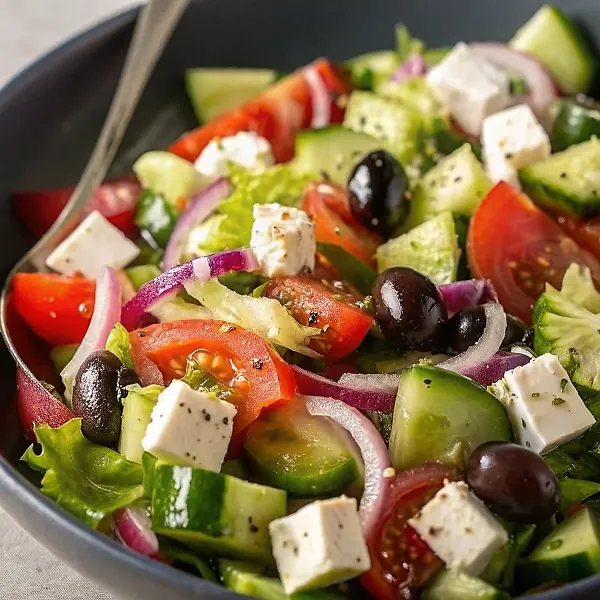
This authentic Traditional Greek salad (Horiatiki) proves that the most memorable dishes often come from the simplest ingredients prepared with care and respect. By focusing on quality vegetables, genuine feta, and the perfect balance of olive oil and vinegar, you’ve created more than just a salad – you’ve crafted a taste of the Mediterranean that brings sunshine to any meal. The beauty of Horiatiki lies in its versatility and healthiness, making it equally at home at a casual family dinner or an elegant dinner party.
Made these Traditional Greek salad (Horiatiki)? Drop your twist in the comments, rate the recipe, and tag us on facebook, instagram with #erinrecipes — we might feature your creation!
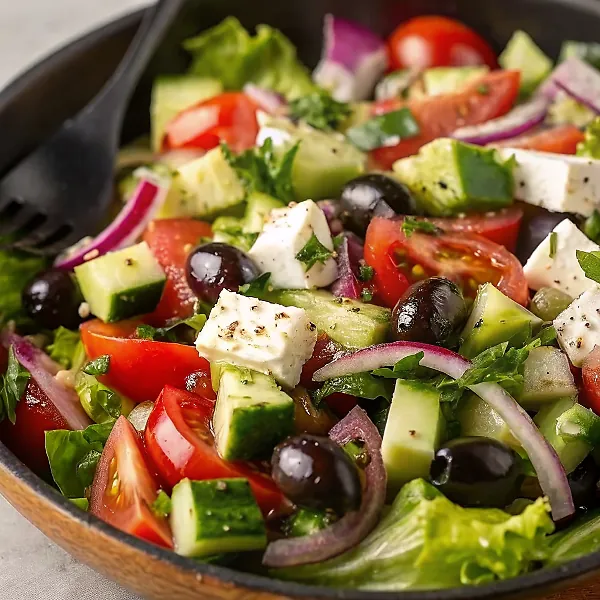
Traditional Greek Salad (Horiatiki): Authentic Mediterranean Recipe
Ingredients
Instructions
- Prep Onion: Soak onion in ice water with 1 tsp vinegar for 10 minutes (optional).
- Combine Vegetables: Combine tomatoes, cucumber, bell pepper, olives, and drained onion in a large serving dish.
- Season and Dress: Sprinkle with 3/4 tsp oregano and salt. Add olive oil and vinegar, toss gently.
- Add Feta and Serve: Top with feta slabs and remaining oregano.