
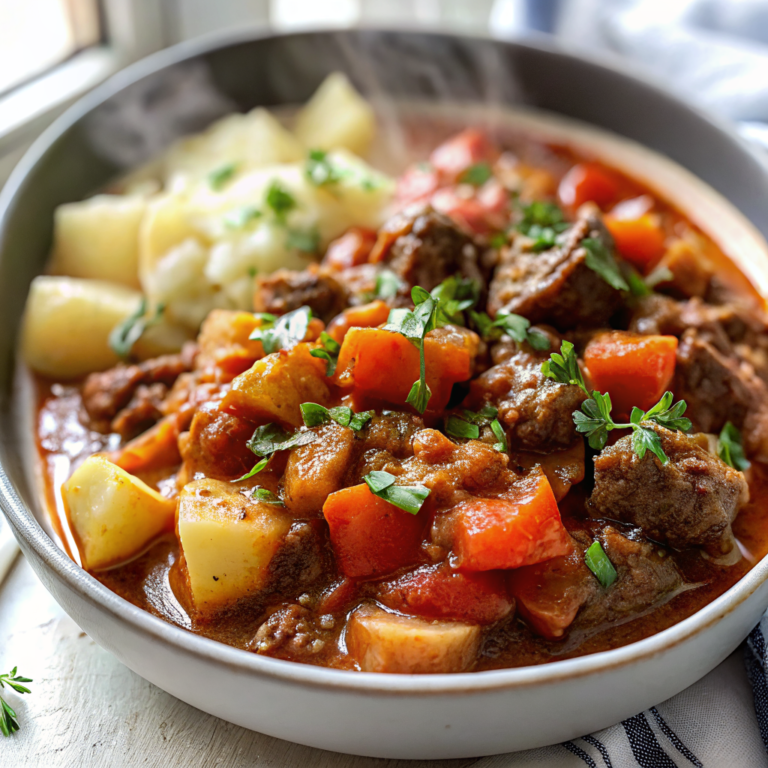
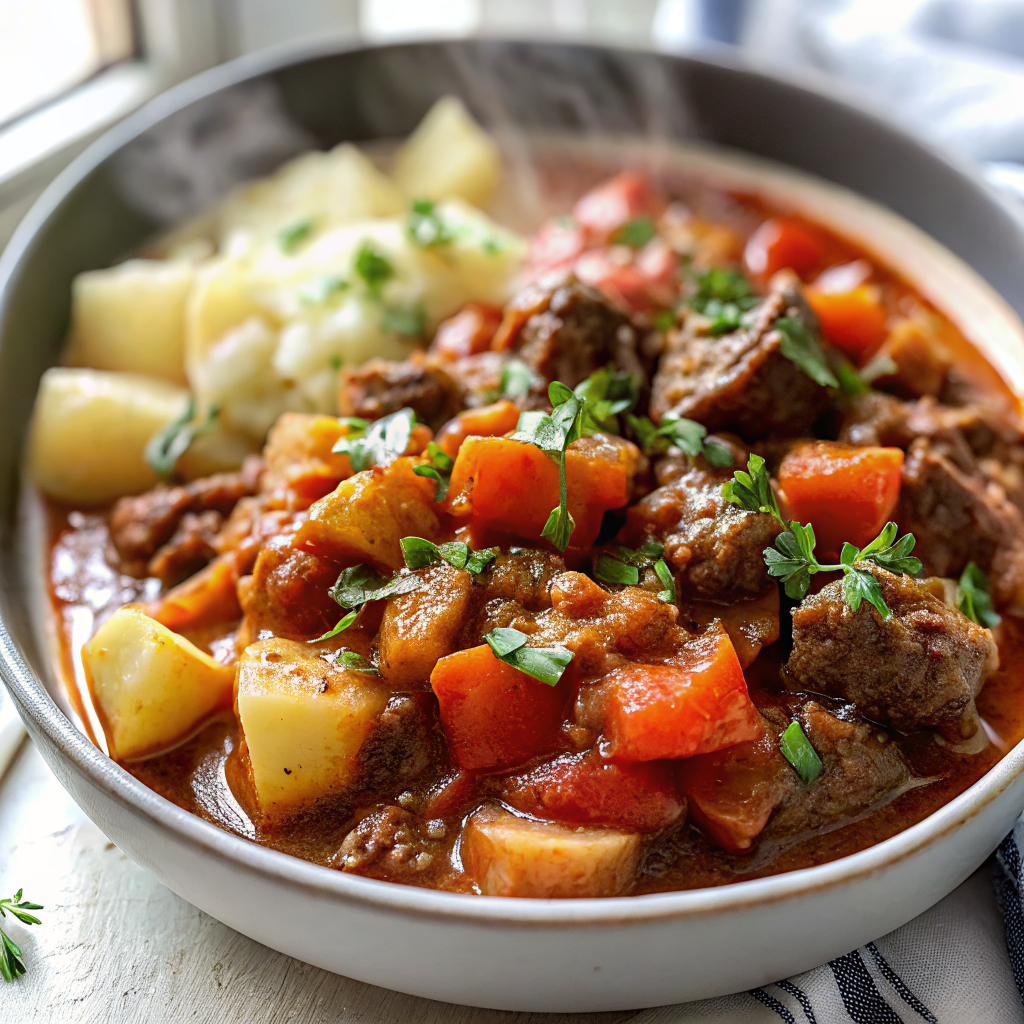
Did you know that visual appeal increases food enjoyment by up to 83% according to food psychology research? When it comes to creating a stunning Goulash (Hungarian) that captivates both the eye and palate, the secret lies in understanding how rich paprika-red hues, tender golden vegetables, and artful plating techniques transform this humble stew into a restaurant-worthy masterpiece. This comprehensive guide will teach you not only how to cook an authentic Hungarian goulash, but how to present it with the visual drama and sophistication that this iconic dish deserves. From achieving the perfect color saturation to creating Instagram-worthy garnish arrangements, you’ll master every aesthetic element that makes Goulash (Hungarian) a true feast for the senses.
Why Visual Presentation Matters for Goulash (Hungarian)
The visual impact of a well-presented Goulash (Hungarian) extends far beyond mere aesthetics—it’s about honoring the cultural heritage and culinary artistry of this beloved dish. When you master the art of plating this vibrant stew, you’re creating an emotional connection that enhances every bite. For more hearty comfort food inspiration, explore our cozy fall soups and stews collection and discover techniques used in our French onion pot roast. Professional chefs understand that the deep crimson color of paprika against the golden tones of caramelized onions creates a visual symphony that signals comfort and warmth. External resources like Let’s Take It Slow – Slow Cooking Basics and Fundamentals and Best Beef Stew Recipe – Delish offer additional insights into achieving perfect slow-cooked presentations.
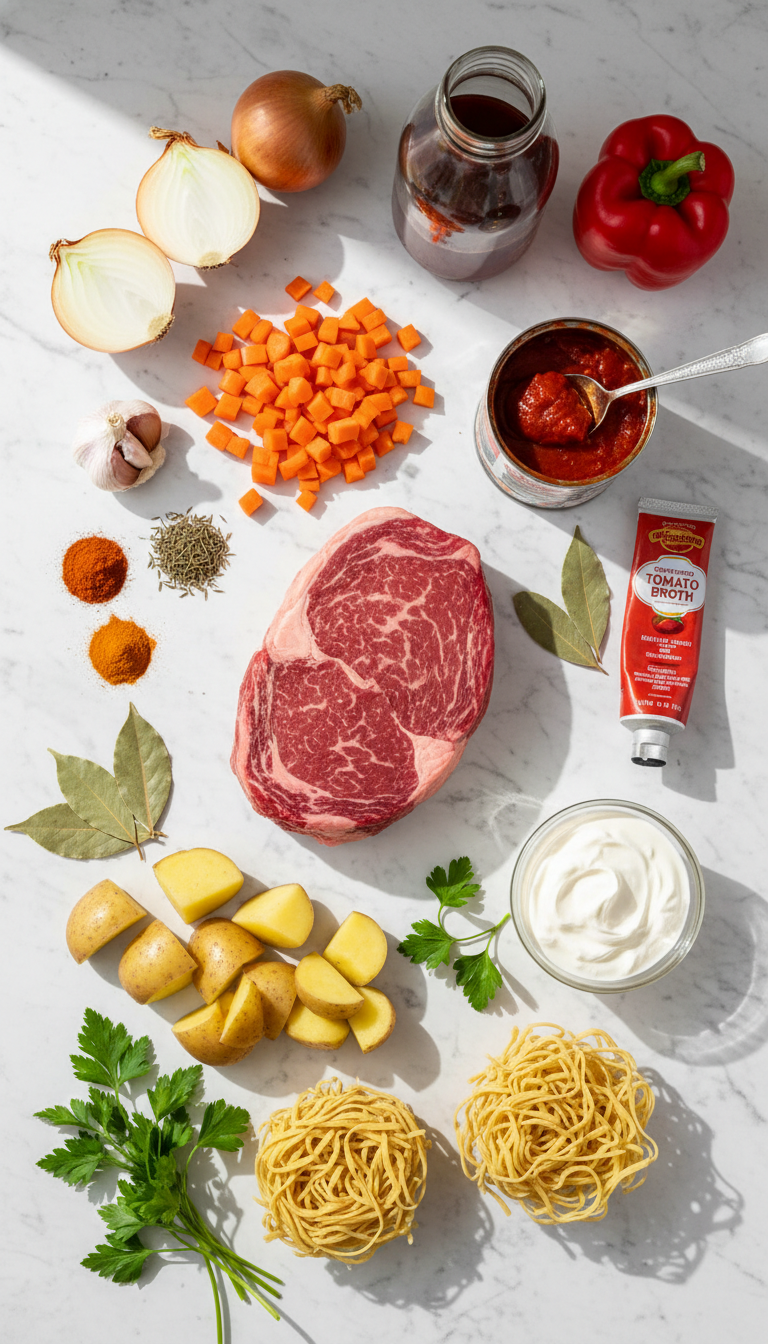
Ingredients for Perfect Goulash (Hungarian)
|
Ingredient Spotlight: Building Visual Layers
The magic of Goulash (Hungarian) lies in how each ingredient contributes to the overall visual story. Sweet paprika serves as your primary color artist, creating that signature deep red hue that makes the dish instantly recognizable. The yellow onions transform into golden-amber jewels when properly caramelized, providing essential color contrast against the rich red base. Yukon Gold potatoes offer creamy, pale yellow chunks that break up the intensity of the red sauce, while fresh carrots add bright orange punctuation marks throughout the stew. The red bell pepper amplifies the paprika’s crimson tones, creating color harmony that’s both striking and appetizing.
Timing for Perfect Goulash (Hungarian)
|
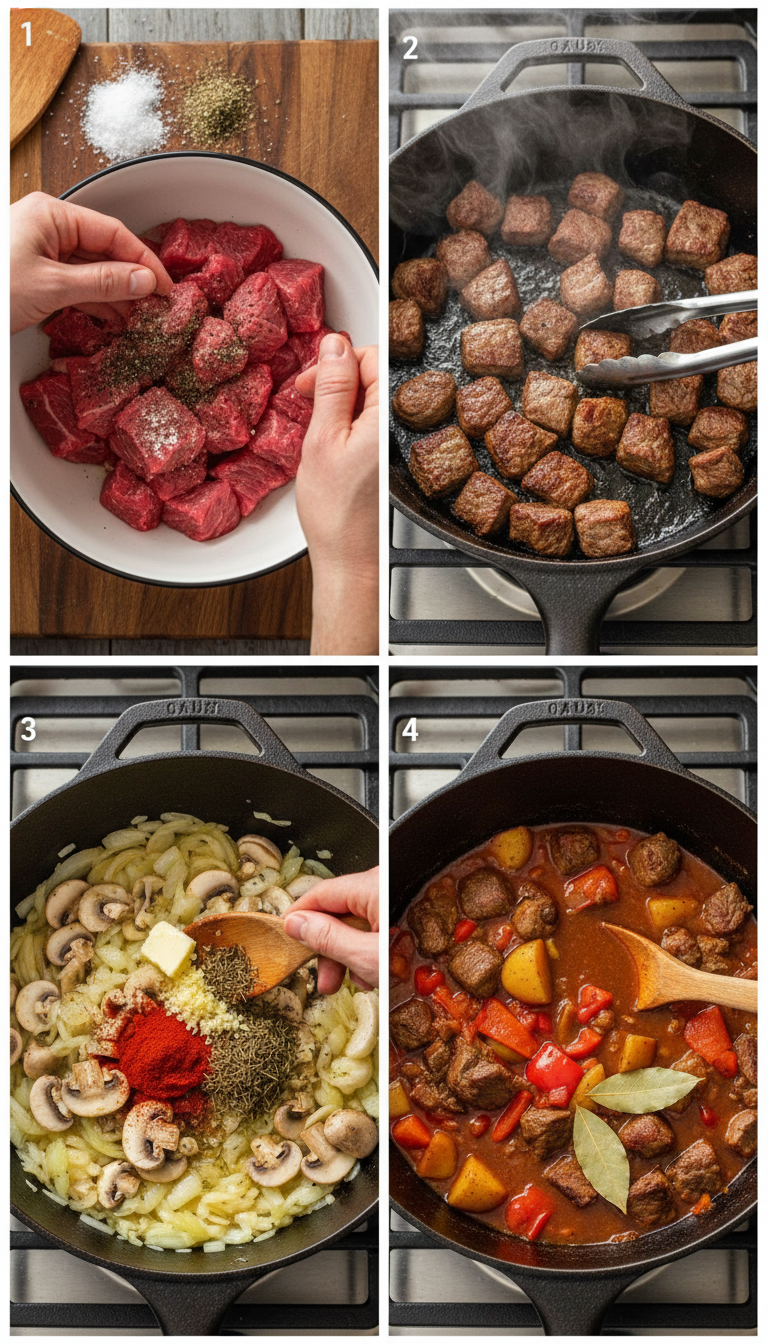
Step-by-Step Instructions for Stunning Goulash (Hungarian)
|
Behind the Recipe: Visual Inspiration
The visual inspiration for this Goulash (Hungarian) comes from the stunning autumn landscapes of the Hungarian countryside, where deep crimson paprika fields stretch endlessly under golden sunlight. I wanted to capture that same warm, enveloping color palette in a single bowl—the rich reds of paprika and tomatoes representing the vibrant pepper fields, while the golden onions and pale potatoes mirror the sun-drenched wheat fields and cream-colored farmhouse walls. The final presentation should evoke the feeling of a rustic Hungarian kitchen, where generations have gathered around steaming bowls of this comforting stew, each serving a small masterpiece of color and texture.
Tips & Tricks for Perfect Goulash (Hungarian) Presentation
|
Recipe Variations & Substitutions for Goulash (Hungarian)
High Contrast Plating Option: Serve over bright white spaetzle or egg noodles to create dramatic color contrast. Vegetarian Twist: Replace beef with large chunks of roasted eggplant and mushrooms, maintaining the same rich paprika base. Textural Enhancement: Add a dollop of sour cream swirled with paprika oil for an elegant two-toned garnish. Color Boost Variation: Include yellow bell peppers alongside red for a more vibrant, multi-colored presentation that photographs beautifully.
Pairing Ideas for Visual Harmony
Complement your Goulash (Hungarian) with sides that enhance rather than compete with its rich red color palette. Serve alongside creamy white spaetzle or pale egg noodles to create striking contrast. Consider crusty artisan bread with a golden crust for textural and color variation. For beverages, choose clear sparkling water with lemon or light-colored herbal teas that won’t clash with the dish’s warm tones. Present everything on neutral-colored plates—cream, white, or soft gray—to let the goulash’s vibrant colors take center stage.
Nutritional Information
Per serving: Approximately 420 calories, 28g protein, 24g carbohydrates, 18g fat, 6g fiber. Rich in vitamin A from paprika and carrots, vitamin C from bell peppers, and iron from beef. Contains potassium from potatoes and antioxidants from tomatoes and paprika.
Leftover & Reuse Ideas
Transform leftover Goulash (Hungarian) into visually appealing new dishes. Use as a filling for flaky puff pastry pockets, creating golden parcels with colorful filling visible through steam vents. Layer over baked sweet potatoes for a beautiful color combination of orange and red. Create goulash-stuffed bell peppers, using the stew as filling and topping with melted cheese for an Instagram-worthy presentation. The rich sauce also makes an excellent base for a hearty shepherd’s pie with golden mashed potato topping.
Serving Suggestions: Mastering the Art of Presentation
The presentation of Goulash (Hungarian) is an art form that transforms a humble stew into a visual masterpiece. Start with warmed, wide-rimmed bowls in cream or white to provide the perfect canvas for the rich red colors. Ladle the goulash carefully, ensuring each serving contains a beautiful distribution of beef, vegetables, and sauce. Create height by mounding the stew slightly in the center of the bowl. Add a generous dollop of sour cream off-center, then use a toothpick to create an elegant swirl pattern. Garnish with finely chopped fresh parsley in a small cluster, not scattered randomly. For restaurant-style presentation, warm your serving bowls in a low oven, place on matching plates with a small piece of crusty bread artfully positioned alongside. The final touch: a light dusting of sweet paprika around the rim of the plate creates a professional, cohesive look that ties the entire presentation together.
Storage & Reheating Tips
Store Goulash (Hungarian) in glass containers to preserve both flavor and visual appeal when reheating. The stew actually improves in both taste and color intensity after 24 hours as the paprika continues to infuse throughout. When reheating, add a splash of beef broth to maintain the proper consistency and glossy appearance. Reheat gently over low heat, stirring occasionally to prevent the bottom from browning and affecting the color. For best presentation, always add fresh garnishes after reheating—never reheat with sour cream or fresh herbs already added.
Common Mistakes to Avoid
Color Pitfalls: Never add paprika to hot oil as it burns quickly and turns bitter, creating an unappealing brown color instead of vibrant red. Texture Issues: Overcooking vegetables leads to mushy textures and dull colors—add potatoes in the final 30 minutes to maintain their shape and creamy appearance. Sauce Problems: Adding dairy-based ingredients too early can cause curdling and affect the smooth, glossy finish essential for beautiful presentation. Garnish Errors: Wilted or browned herbs detract from the overall visual appeal—always use fresh garnishes applied just before serving.
- Is Goulash (Hungarian) gluten-free?
- Traditional Hungarian goulash is naturally gluten-free when served without noodles or bread, making it perfect for those with dietary restrictions while maintaining its beautiful presentation.
- Can I make Goulash (Hungarian) in a slow cooker for better color development?
- Yes, slow cooker preparation actually enhances color development as the long, gentle cooking allows paprika to fully bloom and create deeper, richer red hues throughout the dish.
- What’s the secret to achieving restaurant-quality Goulash (Hungarian) color?
- The key is using high-quality sweet paprika and blooming it properly with the aromatics, plus adding tomato paste for color intensity and depth.
- How do I prevent my Goulash (Hungarian) from looking too watery?
- Proper searing of the beef, gradual liquid addition, and optional cornstarch slurry create the perfect consistency for stunning visual presentation.
- Can I prepare Goulash (Hungarian) ahead for entertaining?
- Absolutely! Goulash actually improves in both flavor and visual appeal when made a day ahead, as the colors deepen and meld beautifully overnight.
Conclusion
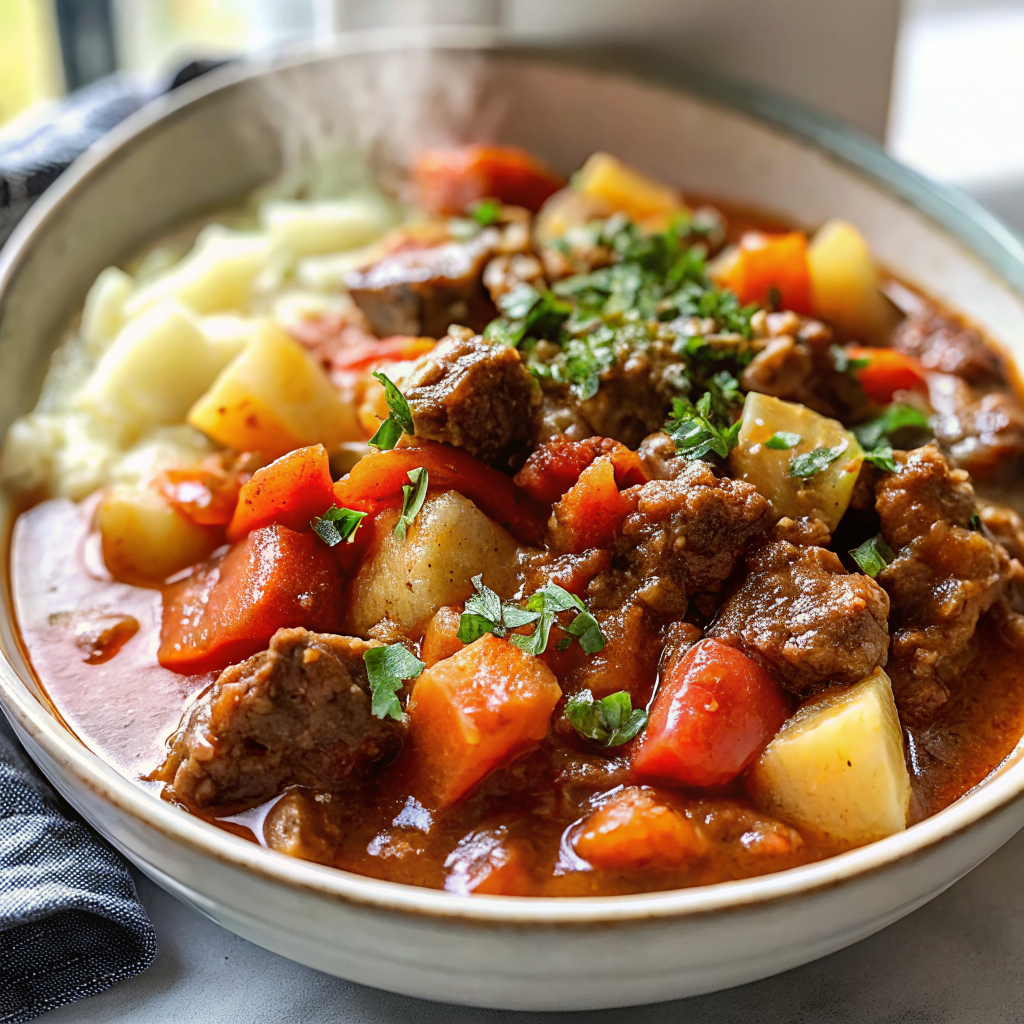
Mastering the art of Goulash (Hungarian) presentation transforms this beloved comfort food into a visual celebration that honors its rich cultural heritage. From the moment you bloom that first spoonful of paprika to the final garnish of fresh parsley, every step contributes to creating a dish that’s as beautiful as it is delicious. The techniques you’ve learned—from achieving perfect color saturation to creating restaurant-worthy plating—will serve you well beyond this single recipe, elevating your entire culinary presentation game.
Made these Goulash (Hungarian)? Drop your twist in the comments, rate the recipe, and tag us on facebook, instagram with #erinrecipes — we might feature your creation!
Goulash (Hungarian) Recipe: A Visual Feast of Colors & Flavors
Ingredients
Instructions
- Season Beef: Season the cubed beef with salt and pepper; set aside.
- Preheat Oven (Optional): Preheat the oven to 325°F (if baking).
- Sear Beef: In a Dutch oven, sear the beef in vegetable oil until browned; remove and set aside.
- Sauté Aromatics and Spices: Cook onions and mushrooms in butter until softened; add garlic and spices.
- Combine Ingredients: Return beef to pot, add tomatoes, broth, and remaining ingredients.
- Cook Goulash: Cover and bake for about 2 hours or simmer on stovetop until tender.