
Did you know that dishes with vibrant green colors can increase appetite by up to 25% according to food psychology research? When I first encountered the Green Goddess Salad, I was struck by its monochromatic beauty—a symphony of emerald hues that creates an almost meditative visual experience. The way the finely chopped cabbage catches light like confetti, contrasted against the creamy jade of avocado and the deep forest tones of the dressing, transforms a simple salad into an edible work of art. This Green Goddess Salad isn’t just about nutrition; it’s about creating a dish that stops conversations and makes people reach for their cameras before their forks. You’ll discover how to achieve restaurant-quality plating, master the art of texture contrast, and create a presentation that elevates this humble salad into something truly spectacular.
Why Green Goddess Salad Matters for Visual Impact
The monochromatic green palette of this Green Goddess Salad creates a sophisticated visual narrative that speaks to our deepest aesthetic sensibilities. When every element shares the same color family yet offers distinct textures and tones, the result is both harmonious and dynamic—a principle borrowed directly from fine art composition.
External Resources
For those seeking to elevate their knife skills for perfect presentation, explore these 10 Basic Knife Cutting Techniques for Better Cooking that will transform your chopping precision. Understanding the nutritional powerhouse behind our star ingredient is equally important—discover more about Cabbage and the Benefits of this Overlooked Superfood. For complementary recipes that share similar visual appeal, consider pairing this with our cucumber vinegar salad or exploring our collection of creamy fruit salad recipes for a complete color-coordinated meal experience.
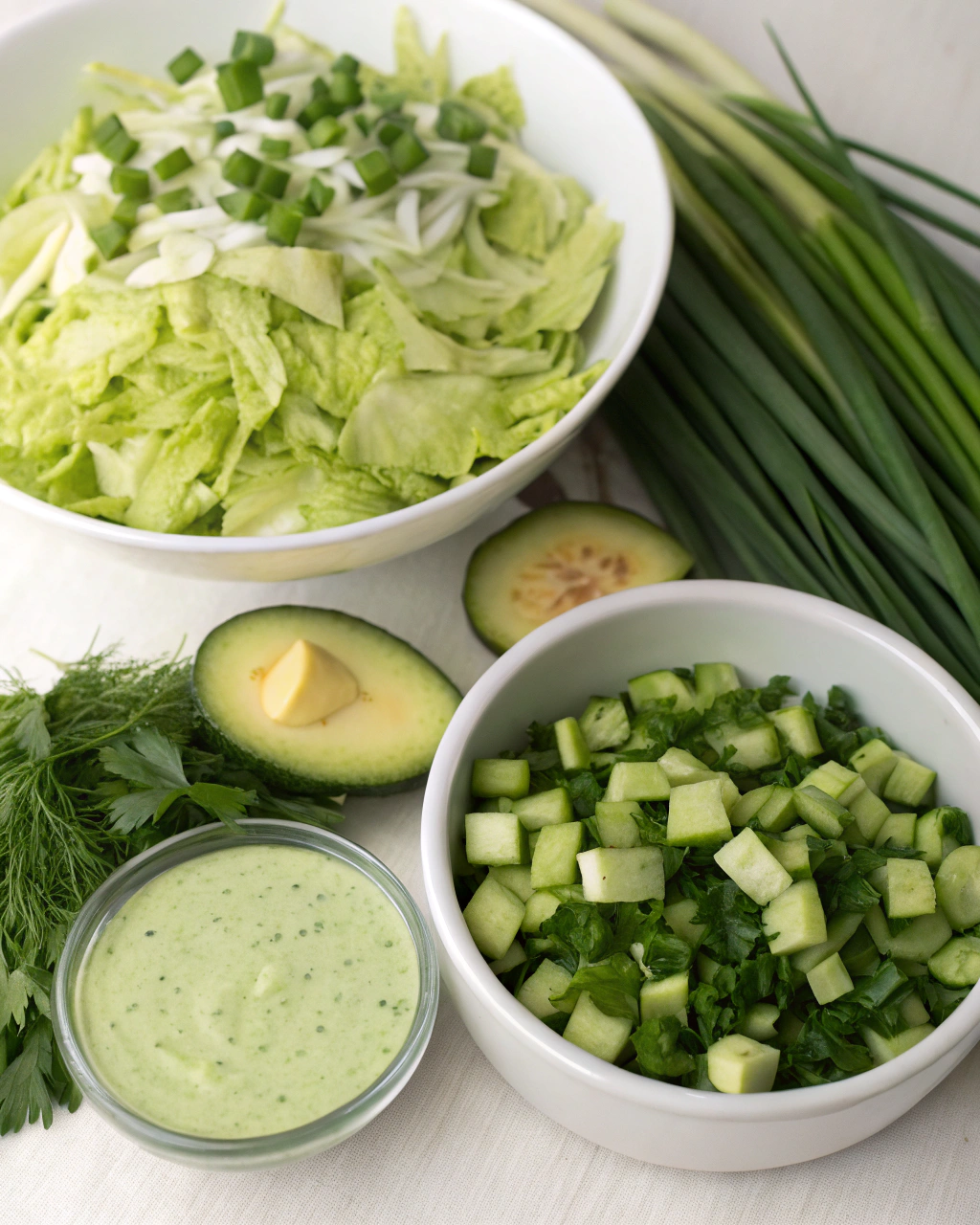
Ingredients for Perfect Green Goddess Salad
|
Ingredient Spotlight: The Art of Green
The cabbage serves as our canvas—its pale green provides the perfect neutral backdrop that allows other ingredients to shine. When chopped to confetti size, it creates textural interest and catches light beautifully. The cucumber adds architectural structure with its geometric dice, while the avocado brings luxurious creaminess that photographs like velvet. Green onions function as the punctuation marks, their darker green creating essential visual depth and preventing the salad from appearing flat in photographs.
Timing for Green Goddess Salad Success
|
Instructions for Picture-Perfect Results
|
Behind the Recipe: A Study in Monochrome
This Green Goddess Salad was inspired by the Japanese concept of “wabi-sabi”—finding beauty in simplicity and natural variation. The monochromatic palette creates a meditative quality that allows diners to focus on the subtle differences in texture and tone within a single color family. Each shade of green tells a story, from the pale whisper of cabbage to the deep richness of the dressing.
Tips & Tricks for Perfect Green Goddess Salad
|
Recipe Variations & Substitutions
High Contrast Plating Option: Serve individual portions in clear glass bowls with a drizzle of dressing around the rim for restaurant-style presentation.
Textural Twist: Add toasted pumpkin seeds for golden color contrast and satisfying crunch that creates visual and textural interest.
Herb Enhancement: Incorporate fresh mint or basil leaves for additional green variation and aromatic complexity.
Dietary Adaptations: Replace avocado with diced green bell pepper for lower fat content while maintaining the color scheme.
Pairing Ideas for Visual Harmony
Serve this Green Goddess Salad alongside dishes that complement rather than compete with its monochromatic beauty. Consider pairing with golden cornbread, white fish, or roasted chicken to create pleasing color contrast. For beverages, sparkling water with lime or cucumber-infused water maintains the fresh, green theme. Present on white ceramic plates or natural wood serving boards to enhance the organic, garden-fresh aesthetic.
Nutritional Information
Per serving: Approximately 95 calories, 7g fat, 6g carbohydrates, 3g fiber, 2g protein. Rich in vitamins K, C, and folate, with beneficial antioxidants from the varied green vegetables.
Leftover & Reuse Ideas
Transform leftover Green Goddess Salad into a stunning wrap filling using large lettuce leaves or spinach tortillas. The mixture also works beautifully as a topping for grilled proteins or as a base for grain bowls. Store components separately for up to two days, combining just before serving to maintain optimal texture and color.
Serving Suggestions for Maximum Impact
Present this Green Goddess Salad in a large, shallow white ceramic bowl to create maximum color contrast. Arrange tortilla chips in a separate basket lined with natural linen for textural and color contrast. For individual servings, use clear glass bowls to showcase the beautiful layers, and garnish each portion with a single green onion curl and a light sprinkle of microgreens. Consider serving on a marble or light wood surface with natural lighting to enhance the fresh, garden-to-table aesthetic. For formal presentations, pipe additional dressing around the plate’s rim using a squeeze bottle for restaurant-quality plating.
Storage & Reheating Tips
Store dressed salad for no more than 2 hours at room temperature to prevent wilting and color degradation. For advance preparation, keep all components separate in the refrigerator—dressing can be made up to 3 days ahead, while vegetables can be prepped the morning of serving. Never freeze this salad as it will compromise both texture and visual appeal.
Common Mistakes to Avoid
Avoid cutting ingredients too far in advance, which leads to oxidation and dull colors. Don’t over-dress the salad, as excess dressing masks the beautiful individual colors and creates a muddy appearance. Prevent using warm ingredients, which will wilt the cabbage and compromise the crisp texture essential for visual appeal. Never store the dressed salad overnight, as the acid in the dressing will break down the vegetables and destroy the vibrant green color palette.
- Is Green Goddess Salad suitable for meal prep?
- Yes, but store components separately. Combine the cabbage, cucumber, and green onions, but keep avocado and dressing separate until serving to maintain optimal color and texture.
- Can I make Green Goddess Salad ahead of time?
- The dressing can be made 3 days ahead, and vegetables can be prepped the morning of serving. However, final assembly should happen just before serving for best visual impact.
- What makes Green Goddess Salad so visually appealing?
- The monochromatic green color scheme creates sophisticated visual harmony, while varied textures and tones within that palette provide interest and depth.
- How do I prevent my Green Goddess Salad from looking dull?
- Keep all ingredients well-chilled, add avocado last, and serve immediately. Use fresh, high-quality ingredients and avoid over-dressing.
- Can Green Goddess Salad be made without avocado?
- Yes, substitute with diced green bell pepper or additional cucumber to maintain the color scheme while providing different textural elements.
Frequently Asked Questions
Conclusion
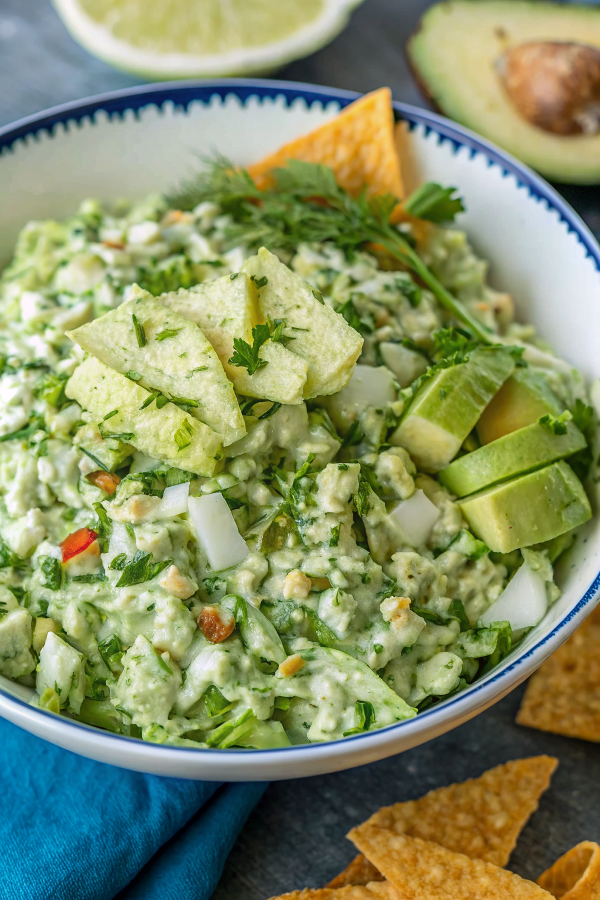
This Green Goddess Salad proves that simplicity and visual impact can coexist beautifully. By focusing on monochromatic harmony, textural contrast, and precise technique, you’ve created more than just a salad—you’ve crafted an edible piece of art that celebrates the beauty of fresh, vibrant ingredients.
Made these Green Goddess Salad? Drop your twist in the comments, rate the recipe, and tag us on facebook, instagram with #erinrecipes — we might feature your creation!
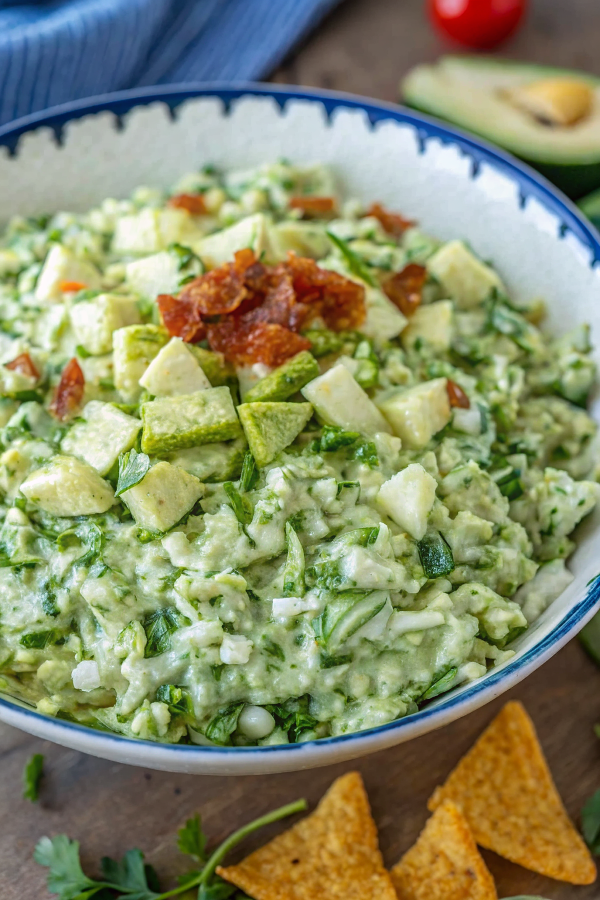
Green Goddess Salad Recipe: Stunning Visual Presentation
Ingredients
Instructions
- Prepare Vegetables: Slice cabbage in half, remove core, and chop into confetti-sized pieces. Dice cucumber, avocado, and chop green onions.
- Combine Ingredients: Combine chopped vegetables in a large bowl.
- Make Dressing: Prepare Green Goddess Dressing in a blender until smooth.
- Toss Salad: Toss dressing with vegetables.
- Serve: Serve immediately with tortilla chips if desired.