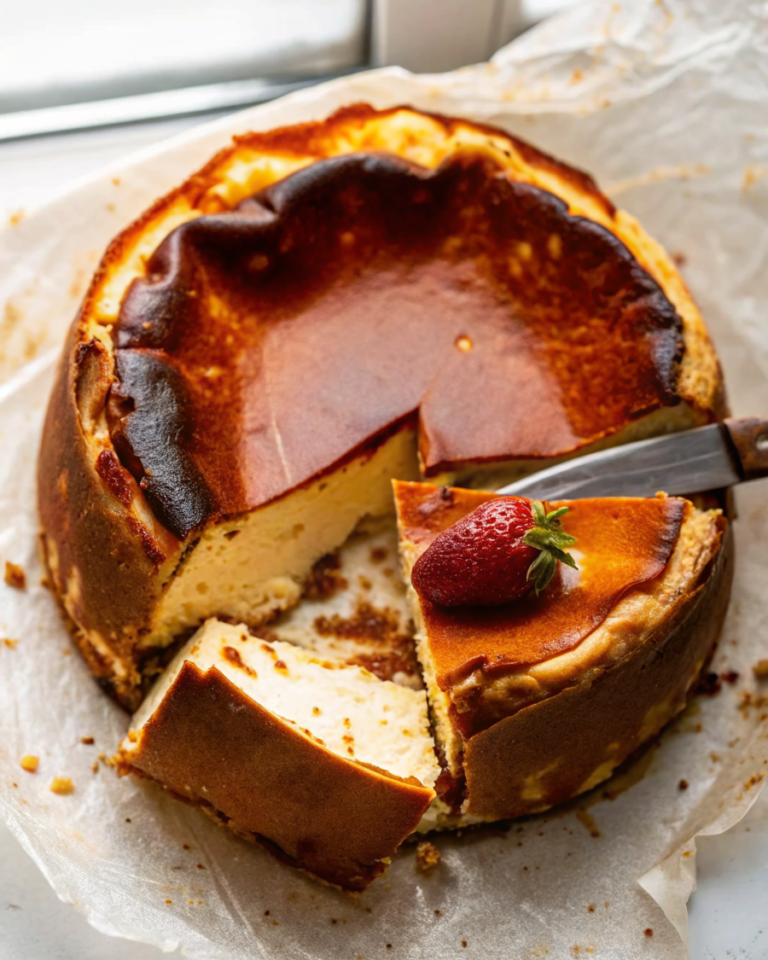
The first time my neighbor brought over a slice of her Basque cheesecake, I nearly dropped my coffee mug. That gorgeous burnt top, the impossibly creamy center, and the rustic charm of crinkled parchment paper – it was unlike any cheesecake I’d ever seen. After one bite of that perfectly jiggly, caramelized masterpiece, I knew I had to master this recipe myself. What started as curiosity turned into an obsession with achieving that signature deep golden surface and silky interior that makes Basque cheesecake so irresistibly different from traditional versions.
This isn’t your typical New York-style cheesecake with its pristine, crack-free surface. Basque cheesecake celebrates imperfection – the burnt top, the rustic parchment paper sides, and that wonderfully wobbly center that sets it apart from every other dessert on the table. Today, I’m sharing everything you need to know to create this Spanish-born sensation in your own kitchen, from the simple ingredient list to the foolproof technique that guarantees bakery-quality results every single time.
Why Basque Cheesecake Matters for Home Bakers
Unlike finicky traditional cheesecakes that require water baths and precise temperature control, Basque cheesecake thrives on high heat and embraces the beautiful imperfections that come with it. This forgiving recipe delivers restaurant-quality results with minimal fuss, making it perfect for both novice bakers and seasoned pros looking for a show-stopping dessert that’s surprisingly simple to execute.
Behind the Recipe
This recipe traces back to Santiago Rivera’s La Viña restaurant in San Sebastián, Spain, where the original burnt cheesecake became a local legend in the 1990s. The genius lies in its simplicity – no crust, no water bath, just pure cream cheese magic baked at high temperature until the top caramelizes into that signature burnt beauty.
Speaking of technique mastery, understanding proper cheesecake fundamentals can elevate all your dessert-making skills. For more indulgent cream cheese desserts, don’t miss our classic chess pie recipe. Professional bakers swear by the methods outlined in Baking Sense’s comprehensive techniques guide, while Allrecipes’ cream cheese dessert collection offers endless inspiration for your next baking adventure.
Ingredients
|
Ingredient Spotlight
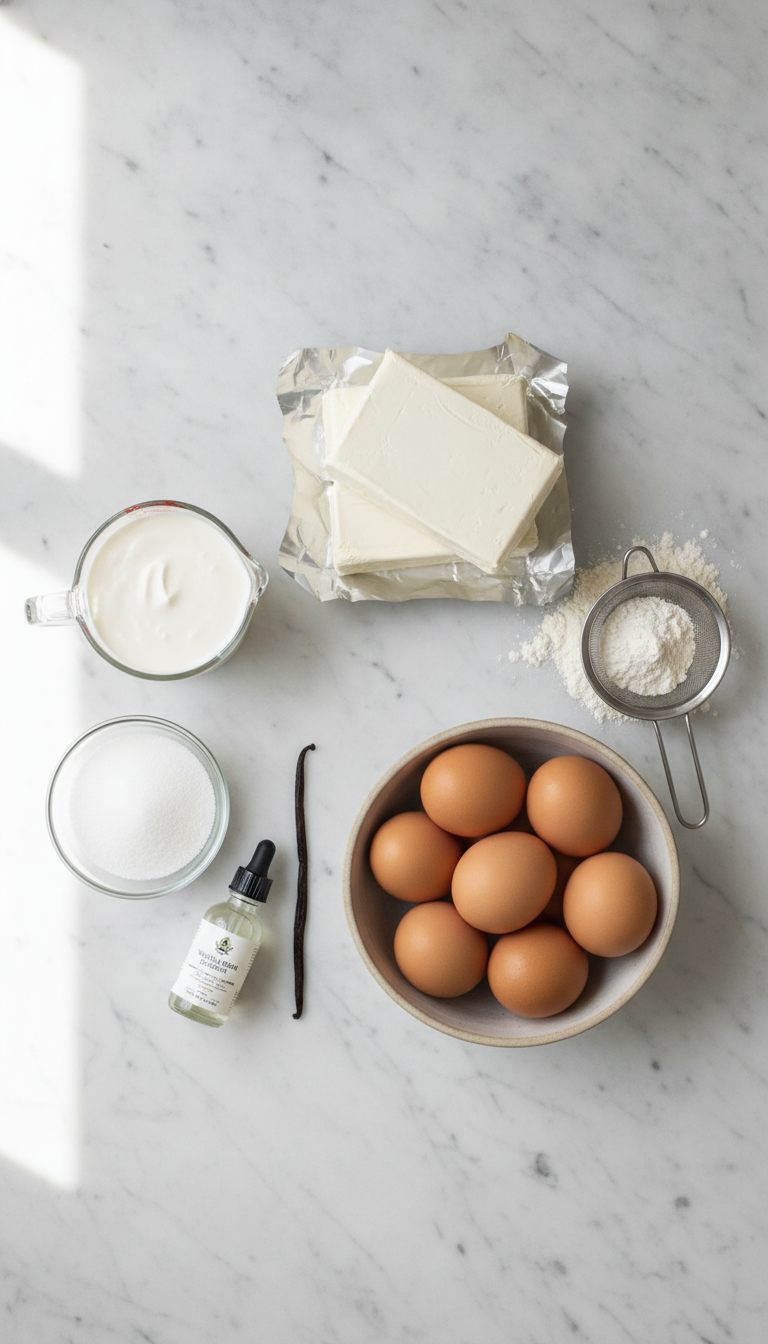
Room temperature cream cheese is absolutely crucial – cold cream cheese creates lumps that never fully disappear. The measured eggs might seem fussy, but this precision ensures the perfect custard-like texture. Whipping cream adds that luxurious mouthfeel that sets this apart from denser American-style cheesecakes, while the small amount of flour provides just enough stability without compromising the signature jiggle.
Timing
|
This timeline is actually 20% faster than traditional cheesecakes since there’s no crust to prebake and no water bath to prepare!
Instructions
|
Tips & Tricks for Perfect Basque Cheesecake
|
Recipe Variations & Substitutions
Chocolate Basque Cheesecake: Add ¼ cup cocoa powder to the flour for a rich chocolate twist. Citrus Version: Replace vanilla with lemon or orange zest for a bright, refreshing flavor. Busy Cook’s Shortcut: Use a food processor to mix everything together – just pulse until smooth and strain out any lumps. Kid-Friendly Adaptation: Reduce vanilla to ½ teaspoon and add a tablespoon of honey for a milder, sweeter flavor that children absolutely love.
Leftover & Reuse Ideas
Leftover Basque cheesecake (if there is any!) makes incredible breakfast when served with fresh berries and coffee. Crumble it over ice cream for an instant gourmet dessert, or blend pieces into milkshakes for the ultimate indulgence. The burnt top pieces are particularly delicious – they add a lovely caramelized crunch to fruit salads or yogurt parfaits.
Pairing Ideas
This rich, creamy dessert pairs beautifully with strong coffee or espresso to balance the sweetness. Fresh berries add a lovely tart contrast, while a glass of cold milk provides a comforting, nostalgic combination. For special occasions, try it with fresh figs or a drizzle of honey for an elegant finishing touch.
Serving Suggestions
Serve Basque cheesecake at room temperature for the creamiest texture, cut into generous wedges with a sharp knife wiped clean between cuts. The rustic parchment paper presentation is part of its charm – don’t hide it! A simple dusting of powdered sugar or a few fresh berries alongside each slice is all the garnish you need to let this stunning dessert shine.
Nutritional Information
Per serving (12 servings): Approximately 380 calories, 32g fat, 18g carbohydrates, 8g protein. This dessert is naturally gluten-light due to the minimal flour content, and the high protein from cream cheese and eggs makes it more satisfying than many traditional desserts.
Common Mistakes to Avoid
Cold Ingredients: Using cold cream cheese creates lumps that never fully disappear, no matter how long you mix. Overbaking: While we want that burnt top, going too far creates a tough, rubbery texture instead of silky smoothness. Skipping the Overnight Chill: I know it’s tempting to cut into it early, but that overnight rest is crucial for achieving the perfect creamy consistency. Overmixing: Once eggs go in, mix just until combined – overworked batter creates a dense, heavy result instead of that signature lightness.
Storage & Reheating Tips
Store your Basque cheesecake covered in the refrigerator for up to 5 days – it actually improves with time as the flavors meld. For longer storage, wrap individual slices tightly and freeze for up to 3 months. Thaw overnight in the refrigerator and bring to room temperature before serving. Never microwave – it ruins that perfect creamy texture we worked so hard to achieve.
- Is Basque cheesecake supposed to be burnt on top?
- Absolutely! That deeply caramelized, burnt top is the signature characteristic of authentic Basque cheesecake. It’s what gives it that distinctive flavor and rustic appearance.
- Can I make Basque cheesecake without a springform pan?
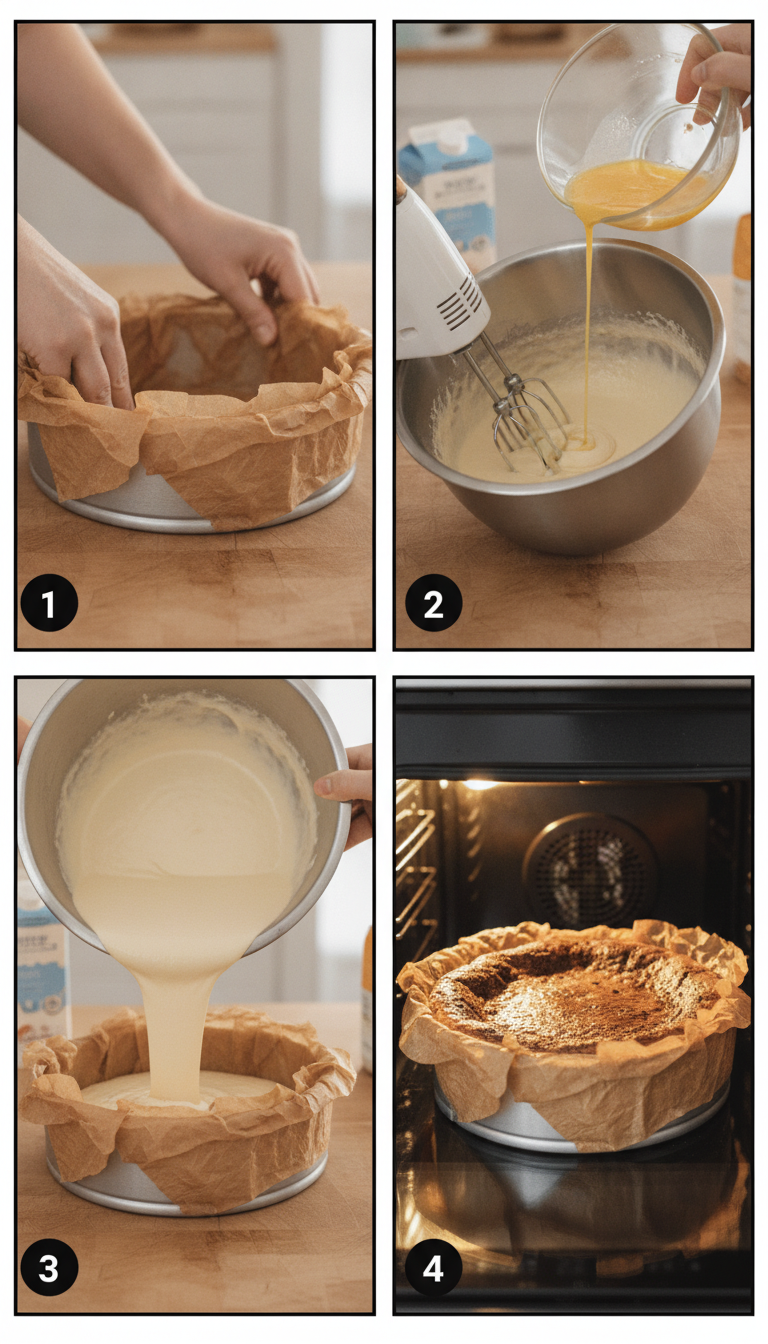
- While a springform pan makes removal easier, you can use a regular 8-inch cake pan lined with parchment paper with long overhangs to lift out the finished cheesecake.
- Why is my Basque cheesecake still jiggly in the center?
- That jiggle is perfect! Basque cheesecake should have a custard-like, slightly wobbly center when done. It firms up during the cooling and chilling process.
- How do I know when my Basque cheesecake is done baking?
- Look for a deep golden-brown top and a center that jiggles like set custard when you gently shake the pan. The baking time can vary from 45-65 minutes depending on your oven.
- Can I make Basque cheesecake ahead of time?
- Yes! Basque cheesecake actually tastes better after resting overnight. You can make it up to 3 days ahead of serving – just keep it covered in the refrigerator.
FAQs
Conclusion
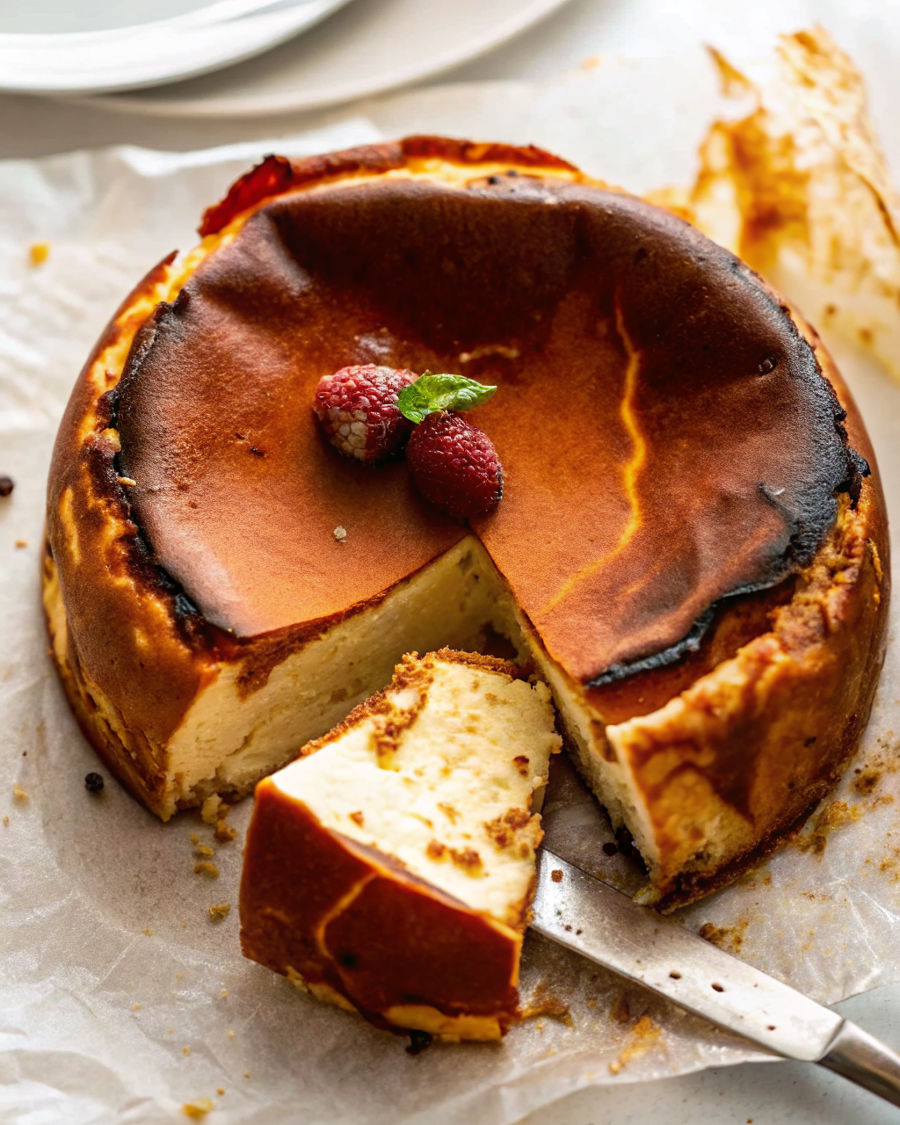
This Basque cheesecake proves that sometimes the most stunning desserts come from embracing imperfection. That gorgeously burnt top, the rustic parchment paper presentation, and the incredibly creamy interior create a dessert that’s both sophisticated and wonderfully approachable. With just six simple ingredients and a foolproof technique, you’ll have a show-stopping dessert that rivals any fancy bakery – and the best part is how forgiving this recipe truly is.
Made these Basque Cheesecake? Drop your twist in the comments, rate the recipe, and tag us on facebook (https://web.facebook.com/profile.php?id=61563004298635), instagram (https://www.instagram.com/erinrecipes) with #erinrecipes — we might feature your creation!
Basque Cheesecake Recipe: Burnt Perfection Made Simple
Ingredients
Instructions
Nutrition Facts
Nutrition data is currently unavailable for this recipe.